
Is Your Footwear Causing Ingrown Toenails?
Why genetics isn't to blame—and how your shoes create the problem You've dealt with the pain before. That tender, throbbing sensation around your big toenail that makes every step uncomfortable. Maybe you've heard that ingrown toenails run in families, or perhaps you blame your nail-cutting technique. But what if the real culprit is sitting in your closet right now? Let's unpack the truth about ingrown toenails and discover how something as simple as proper footwear can transform your foot health.
12/29/20256 min read
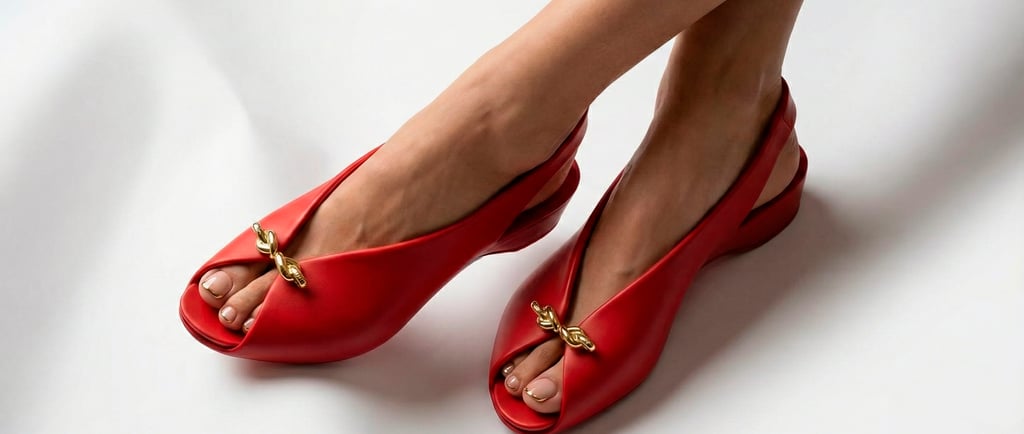
The Hidden Dance: How Footwear Betrays Your Feet
Here's a sobering fact: ingrown toenails never occur spontaneously. Despite what many believe, they're not genetic accidents waiting to happen. Instead, they're the direct result of external pressure—and your shoes are the primary offender.
Consider this paradox: people weighing 200 kilograms or more, wearing loose-fitting footwear, rarely develop ingrown toenails. They have excess tissue around their nail beds, yet experience no pain. Meanwhile, thin individuals in fashionable, fitted shoes frequently suffer. The difference? External compression.
When shoes are too small—even by just half a size—they create relentless pressure on your toe tissues. The surrounding soft tissue swells and becomes inflamed, essentially engulfing the nail edges. Your body interprets this as a threat, triggering an inflammatory response that leads to redness, pain, and sometimes infection. The nail isn't growing incorrectly; rather, the inflamed tissue is closing in around a perfectly normal nail.
The betrayal intensifies with movement. Every step in ill-fitting shoes applies hundreds of pounds of force to your compressed toes. Over weeks and months, this chronic trauma creates microscopic damage that accumulates. Your body attempts to protect itself by thickening the skin and tissue around the nail—ironically making the ingrown toenail problem worse.
Here's the sobering reality: 98% of people complaining about chronically sweaty feet are simply wearing shoes that are too small. The confined space increases temperature, triggering your body's cooling response. And where there's persistent moisture in tight quarters, there's a perfect environment for nail problems to develop.
Smart Strategies for Preventing Ingrown Toenails
Measure Your Feet Properly
You cannot measure your own feet accurately—you need an assistant. Stand on paper, bend your knee slightly (mimicking your walking gait), and have someone trace around your foot at right angles to the paper. Measure from heel to your longest toe. Forget size numbers entirely; they vary wildly between manufacturers. Instead, measure your foot length in centimeters and match it precisely to the shoe's interior measurement.
Test New Footwear Correctly
Always try shoes while wearing fresh, properly-sized socks that extend from your heel to the first joint of your toes. Old, stretched socks can pull your toes back by up to three sizes, creating a false sense of fit. While standing with knees bent, lift your toes up inside the shoe and note what each toe feels. Walk around for at least ten minutes—your brain needs time to register the true comfort level.
Understand Foot Width Matters
Foot width (fullness) isn't about being overweight—it's anatomical structure. Your foot's width varies based on the distance between your metatarsal bones. A narrow foot won't suddenly fit into ballet flats because you force it, and a wide foot shouldn't be compressed into pointed dress shoes. Each foot type requires its corresponding shoe shape.
Watch for Red Flags
Any callus formation signals friction—and friction means your shoes don't fit. If shoe backs wear down quickly, your footwear is too small. If shoes deform, crease excessively, or develop holes at stress points, they're the wrong size or width. These aren't signs of heavy walking; they're evidence of biomechanical misalignment.
Avoid the 'Breaking In' Myth
Shoes don't stretch to accommodate your feet—they simply deform under pressure. If footwear causes any discomfort in the store, it will cause problems long-term. Even leather shoes labeled as 'needing break-in time' should feel immediately comfortable. The correct shoe fits perfectly from day one.
Choose Appropriate Heel Heights
The maximum anatomically-appropriate heel height is 3 centimeters. Anything higher forces your foot into an unnatural position, sliding your toes forward and compressing them against the front of the shoe. Even a few hours in higher heels can create conditions for ingrown toenails, especially if the shoe is already slightly too small.
Replace Socks Regularly
Socks should be replaced every 3-4 months. Stretched, worn socks can compress toes backward, effectively reducing your shoe's interior space. Fresh socks maintain proper foot position and prevent unnecessary toe crowding.
Strengthen Foot Muscles
Spend 30 seconds daily practicing toe grips—imagine gathering a towel or paper with your toes. This simple exercise strengthens intrinsic foot muscles, improving your foot's structural integrity and reducing deformities that contribute to nail problems. You can do this while brushing teeth or making coffee.
Debunking Common Myths About Ingrown Toenails
Myth 1: "Ingrown toenails are genetic and hereditary"
Reality: There is no genetic component to ingrown toenails. They result exclusively from external pressure. If multiple family members suffer from this condition, it's likely because they share similar footwear habits or foot shapes—not because of inherited genes. The proof lies with individuals of extreme weights who wear appropriately-sized shoes and never develop ingrown nails despite having tissue characteristics that supposedly predispose them to the condition.
Myth 2: "You need to cut toenails in a specific shape to prevent ingrowth"
Reality: Nail cutting technique doesn't cause ingrown toenails—external pressure does. Whether you trim straight across, rounded, or square-shaped is irrelevant if your shoes fit properly. The nail is dead keratin that cannot 'grow into' tissue. The surrounding inflamed tissue swells around the nail due to compression, not because of how you trimmed.
Myth 3: "Shoes need to be broken in over time"
Reality: This dangerous myth causes countless foot problems. Shoes don't mold to your feet—they simply deform and wear down under repeated stress. If footwear feels uncomfortable initially, it will damage your feet long-term. Even leather shoes should feel comfortable immediately. The 'breaking in' period you experience is actually your feet developing calluses, blisters, and compression injuries as they attempt to adapt to ill-fitting footwear.
Myth 4: "Ingrown toenails are a minor cosmetic issue"
Reality: Chronic ingrown toenails alter your gait, forcing you to compensate with different muscles and creating abnormal stress patterns throughout your body. This chain reaction affects your knees, hips, and spine, potentially leading to arthritis and chronic pain in joints far from your feet. For individuals with diabetes or compromised circulation, ingrown toenails can escalate to serious infections, ulcers, and even amputations.
Myth 5: "Bare feet or minimalist shoes will fix foot problems"
Reality: Barefoot shoes and minimalist footwear only benefit people with healthy, problem-free feet who have gradually adapted their musculoskeletal system to reduced support. For individuals with existing conditions like flat feet or structural abnormalities, minimalist shoes can cause significant discomfort and worsen problems. They don't 'cure' foot issues—proper fitting shoes with appropriate support do.
Your Questions Answered
Q: My toenails keep turning black and falling off when I run long distances. Is this normal?
A: This is chronic trauma from footwear that's too small. During extended running, your feet swell and slide forward with each stride, repeatedly jamming your toes against the shoe front. The resulting hematoma (blood pooling under the nail) eventually causes nail loss. Size up your running shoes by at least half a size, and ensure there's adequate toe box space. Professional runners never lose toenails if their shoes fit correctly.
Q: Can I wear heels occasionally for special events without damaging my feet?
A: Even occasional heel wear above 3 centimeters creates acute trauma. In heels, you must typically size down by 1-1.5 sizes because your foot slides forward—meaning you're compressing already-compressed toes. While a single evening might not cause permanent damage, repeated exposure creates cumulative microtrauma that can trigger exostosis (bone spurs) and chronic ingrown toenail development. If you choose heels, minimize duration and ensure they're wider than fashion typically dictates.
Q: What type of shoes should I avoid completely?
A: Flat canvas sneakers (like Converse), narrow dress shoes, pointed-toe pumps, and flip-flops between the toes are the worst offenders. Canvas sneakers force toes inward and provide no arch support. Pointed shoes physically cannot accommodate normal toe spread. Flip-flops require you to grip with your toes to keep them on, causing unnatural toe positioning and eventually hammer toe deformities. Choose shoes with wide toe boxes, proper arch support, and secure heel cups instead.
Q: I've been told I need orthopedic shoes. Are the ones in stores really medical-grade?
A: True orthopedic footwear is custom-made for your specific foot anatomy and biomechanical needs—it cannot be mass-produced. Shoes labeled 'orthopedic' in retail stores are simply well-constructed footwear with better support than average, but they're not medical devices. If you have significant structural foot problems, you need custom shoes or orthotics fitted by a podiatrist, not over-the-counter products.
Finding Your Personal Balance
The relationship between footwear and foot health isn't about perfection—it's about awareness and making informed choices. We've challenged the genetic myth and revealed that ingrown toenails stem from mechanical forces you can control. Your feet bear your body's weight through thousands of steps daily, and they deserve footwear that supports rather than sabotages them.
Every foot is unique. Your shoe size might differ between brands, between styles, and even between your left and right feet. This isn't a flaw in manufacturing—it's a reflection of your body's natural asymmetry. Embrace the process of finding what works specifically for you, even if it means your shoe size surprises you or conflicts with your self-image.
If you're currently dealing with ingrown toenails or chronic foot pain, consult a podiatrist who can assess your specific situation. They can identify whether structural issues, circulation problems, or simply poor footwear choices are causing your symptoms. For people with diabetes, cardiovascular disease, or compromised immune systems, professional foot care isn't optional—it's essential for preventing serious complications.
The optimistic truth? Most ingrown toenail problems resolve completely with proper footwear and basic foot hygiene. You don't need surgery, expensive treatments, or genetic intervention. You simply need shoes that fit, socks that don't compress, and the patience to let your feet heal from years of compression trauma.
Your feet carry you through life. Honor them with footwear that protects rather than punishes. The discomfort of challenging your shoe size assumptions is temporary—the relief of healthy, pain-free feet is permanent.